








How to Get More Google Reviews as an HVAC Contractor
How Do You Actually Get More Google Reviews as an HVAC Contractor?
You ask every customer within minutes of the job finishing, not weeks later, and you make it a one-tap process from a text message. HVAC contractors who automate that single step consistently out-pace competitors who rely on staff remembering to ask, especially during the busy cooling season when techs are running back to back jobs with no downtime.
This matters more in September 2026 than it did a few years ago. Homeowners now check reviews before almost every service call, and the bar for what counts as a credible HVAC company keeps rising.
Why Do Reviews Matter So Much for HVAC Companies Specifically?
Homeowners rarely see the inside of an HVAC system before hiring someone to work on it, so they lean on other people's experience instead. Survey data reported by ACHR News found that 91% of homeowners rate online reviews as an important factor when choosing an HVAC contractor, and 73.9% said reviews directly influenced which company they picked. The same reporting found that 56% of homeowners go straight to Google first when they start looking, ahead of any other source.
Yet the same coverage found only 61% of HVAC contractors post reviews anywhere on their own website, and plenty do little to actively generate new ones on Google. That gap between what homeowners want and what most HVAC companies actually provide is where a smaller, review-heavy company can out-rank a bigger name with an outdated profile.
What Star Rating Actually Moves the Needle?
Star rating and review count both matter, but not equally. Industry reporting on HVAC review benchmarks puts the sweet spot at 4.7 to 4.9 stars, with click-through rates dropping noticeably below 4.5 and homeowners largely moving on without calling once a company drops under 4.0. Volume matters too: a company sitting at a perfect 5.0 stars with only 12 reviews will typically lose out to a competitor at 4.7 stars with 280 reviews, because volume signals a track record a single perfect score can't.
| Job Type | Best Time to Ask for a Review | Why |
|---|---|---|
| AC tune-up or repair | Within 1 hour of the tech leaving | Relief that the system is cooling again is highest right after the fix |
| Furnace or heating repair | Same day, after confirming heat is working | Winter comfort jobs get emotional gratitude that fades fast once the house warms up |
| New system install | 24 to 48 hours after installation, once the customer has used it | Lets the homeowner experience quieter operation or lower energy use before rating it |
| Emergency no-heat or no-cool call | Immediately after the job, same visit if possible | Emergency relief produces the strongest, most detailed reviews when captured fast |
Does Southern California's Climate Change How HVAC Contractors Should Time Review Requests?
Yes, in a specific way. Most of Southern California has a cooling-dominant climate with mild winters, so HVAC contractors here see a much larger share of their annual call volume tied to air conditioning tune-ups, repairs, and installs than contractors in colder states do with furnace work. That means the AC tune-up and repair review window, right after the technician leaves, deserves more attention from a Southern California HVAC company's automation than furnace-specific messaging that a Midwest contractor might lean on instead.
A California-specific detail worth building into any review request: HVAC contractors doing installation, service, or repair work here need a C-20 license from the California State License Board, and jobs of $1,000 or more in combined labor and materials require that license by law. Homeowners increasingly check for license numbers on Google Business Profiles before booking, so including a license number in the business profile description supports the same trust signal that reviews build.
Is It Against Google's Rules to Ask Customers for Reviews?
No. Google explicitly allows businesses to ask customers for reviews, including sending a direct link to the review form. What Google prohibits is offering an incentive in exchange for a review, filtering customers so only happy ones get asked, or posting fake reviews. A straightforward text asking every customer, regardless of how the job went, to share their experience is within the rules and is the standard practice among HVAC companies that generate reviews well.
How Does Automating This Actually Work Day to Day?
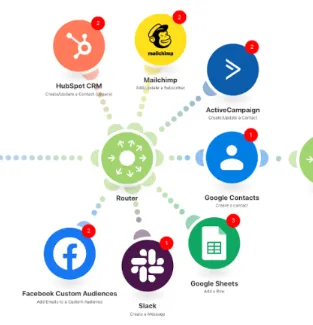
When a technician marks a job complete in the dispatch or invoicing software, an automated text goes out to the customer with a direct link to leave a Google review, typically within minutes rather than hours. If a customer calls the office and nobody picks up, an automatic text-back response goes out right away so the lead doesn't call the next company on their list while waiting for a callback. Neither step replaces a real conversation. Both close the gap between the moment a customer is ready to act and the moment someone from the company actually follows up.
For HVAC companies that want this running without building it themselves, the Essentials plan is $297 per month plus a $1,000 setup fee, and it comes with a guarantee of 10 new reviews within 90 days or the setup fee is refunded.
Frequently Asked Questions
How many Google reviews does an HVAC company need to compete locally?
There's no single number that guarantees ranking, but consistency matters more than hitting a target. A steady stream of new reviews each month, even five or ten, tends to outperform a large batch of old reviews that stopped growing a year ago.
What star rating do most homeowners require before they'll call?
Reporting on HVAC review benchmarks puts 4.7 to 4.9 stars as the range where click-through and call volume are strongest, with a noticeable drop-off below 4.5 stars and most homeowners passing entirely below 4.0.
Is it against Google's policy to ask customers for reviews?
No. Asking is allowed and common practice. What's against policy is offering incentives for reviews, only asking happy customers, or posting fake reviews on your own behalf.
Do I need a California contractor license to do HVAC work?
Yes. HVAC installation, service, and repair work requires a C-20 license from the California State License Board once a job reaches $1,000 in combined labor and materials, or if a permit is required regardless of cost.
How do I get reviews from customers who don't respond to a text right away?
A single automated follow-up a few days later, sent once rather than repeatedly, captures a meaningful share of customers who meant to leave a review but got busy. Repeated nagging tends to annoy customers rather than convert them.