








AI Lead Response and Review Automation for Jacksonville HVAC Contractors
Most Jacksonville HVAC companies lose the call before the technician ever picks up the phone
A homeowner whose AC quits in Jacksonville's August humidity calls three or four companies in a row and books with whoever answers first. Jacksonville HVAC contractors that text back missed calls within a minute and follow up automatically close more of those jobs, and the ones that ask for a Google review right after the invoice closes build the rating that gets the next call in the first place. This is November 2026, and both pieces run on the same system.
Why does speed matter more than price on a Jacksonville AC call?
Jacksonville summers run long. Peak cooling season stretches from roughly May through October, and during that stretch a Jacksonville HVAC contractor's phone rings constantly with no-cool emergencies, not maintenance requests. A homeowner with a dead system in July humidity is not comparison shopping for a week. They are calling down a list, and the first company that responds usually wins the dispatch, regardless of who has the better price or the longer warranty.
The problem is not lead volume for most established Jacksonville contractors. It is that a tech on a roof or in an attic can't answer a second line, and a missed call with no follow-up is a lost job every time, not half the time. An automated text sent within sixty seconds of a missed call keeps that homeowner on the hook while the crew finishes the current job.
What does Florida actually require to run an HVAC business in Jacksonville?
Florida licenses HVAC contractors at the state level through the Department of Business and Professional Regulation's Construction Industry Licensing Board, not city by city. A Certified license lets a contractor work anywhere in the state; a Registered license restricts the holder to the city or county where it was issued, which matters for a Jacksonville-only operator deciding whether to expand into St. Augustine or Orange Park. Getting a Certified license requires four years of combined education and experience with at least one year in a supervisory role, passing both a trade knowledge exam and a business and finance exam at 70% or better, and carrying at least $100,000 in public liability and $25,000 in property damage coverage.
Locally, Jacksonville runs permitting through its own system, and a contractor has to be registered with the city's building division before pulling permits on most installation and replacement jobs. Smaller repair work is sometimes exempt, but a full system swap generally is not. None of this is exotic, but it is one more reason a homeowner trusts a contractor with a visibly complete, well-reviewed Google profile over one with six reviews and no online footprint: it reads as a company that has been doing this long enough to have the paperwork handled too.
How many Google reviews does it actually take to win the comparison?
Review count alone doesn't decide the call, but it is usually the first thing a homeowner looks at after price. A contractor stuck at 15 to 20 reviews next to three competitors sitting above 150 looks newer and smaller, even if the work is identical. The fix isn't a review campaign that runs once; it's asking every finished job, every time, automatically, so the count keeps climbing instead of stalling the month the office gets busy.
| Factor | What it means for a Jacksonville HVAC contractor |
|---|---|
| Licensing tier | Certified (statewide) vs. Registered (city/county-limited) through Florida DBPR |
| Minimum liability insurance | $100,000 public liability / $25,000 property damage (commonly cited DBPR figures) |
| Local permitting | Registration required with the City of Jacksonville building division for most installs |
| Peak demand window | Roughly May through October, with heat advisories pushing heat index past 104°F in summer 2026 |
| Humidity load | Jacksonville summer humidity commonly runs 79-81%, lengthening system run times beyond temperature alone |
What does review and lead-response automation actually do day to day?
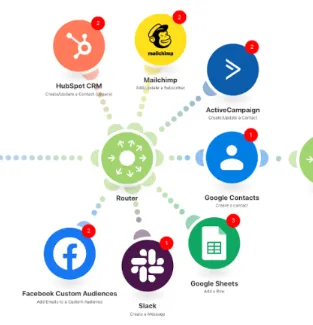
For a Jacksonville HVAC contractor, the system does two things on a loop. First, every missed call and web form gets a text response within a minute or two, with a human-sounding follow-up sequence that keeps trying until someone responds or opts out. Second, every closed job triggers a review request by text, timed for right after the invoice goes out while the relief of cool air again is still fresh, with a reminder a few days later if nothing came in.
Mouthpiece Interactive runs this for home services contractors under the Essentials plan: $297 a month plus a $1,000 setup, with a commitment of 10 new reviews in 90 days or the service is free. It is not a CRM replacement or a dispatch tool. It is the layer that catches the calls a busy HVAC office would otherwise miss and the reviews a satisfied customer would otherwise forget to leave.
Frequently asked questions
How fast does a Jacksonville HVAC company need to respond to a missed call to keep the job?
Industry follow-up studies on lead response generally put the window at a few minutes before a caller moves to the next name on their list, and that window shrinks further during a heat wave when every competitor's phone is also ringing. An automated text within sixty to ninety seconds of a missed call keeps the conversation open while a technician finishes the job in front of them.
Does a Jacksonville HVAC contractor need a Certified or a Registered license?
A Registered license only covers work in the specific city or county where it was issued, so a contractor planning to take jobs in Jacksonville and nearby counties like St. Johns or Clay generally needs the statewide Certified license instead. Confirm current requirements directly with DBPR before applying, since licensing rules change.
Why does review automation matter more in a hot, humid market like Jacksonville?
Emergency no-cool calls spike hard in summer, and homeowners in that moment pick based on whatever shows the most trustworthy Google profile in a quick search, not on a saved favorite. A contractor whose review count and recency keep pace with demand gets picked more often during exactly the weeks that matter most.
What's the difference between this and a review request I send manually after a job?
Manual requests get skipped the moment the office gets busy, which in HVAC is every week from May through October. Automation sends the same ask every time, on the same schedule, regardless of how slammed the day was.