








AI Lead Response and Review Automation for Phoenix HVAC Contractors
What's the fastest way for a Phoenix HVAC contractor to get more Google reviews?
Answer: Automate the ask. Phoenix HVAC companies that text a review link within minutes of a completed service call close on review rates of 15-20%, versus the low single digits most contractors get from asking in person or mailing a card weeks later. Pair that speed with instant lead response (most Phoenix homeowners calling about a dead AC in July are also calling two or three competitors) and you fix both ends of the funnel at once. As of October 2026, this is one of the more straightforward automation wins available to a local HVAC company.
Why does review automation matter more for HVAC than other trades in Phoenix?
Phoenix logged 63 days over 100 degrees in 2026, the second-highest count on record at Sky Harbor behind 2020's 66 days, and summer 2026 ranked as the city's second-hottest summer on record with a June-August average of 97 degrees, according to NOAA data reported by KJZZ. Maricopa County confirmed 136 heat-related deaths in 2026, a grim marker of how serious AC failure is here. When a Phoenix condenser dies in August, the homeowner isn't comparison shopping for a week: they're calling the first licensed contractor who picks up, checking Google reviews on their phone while the house heats up around them. A thin or stale review profile costs you that call before you ever get the chance to quote it.
That urgency compresses the sales cycle into minutes, which is exactly why automated lead response and automated review requests pay off faster for HVAC than for trades with longer buying cycles.
What licensing applies to HVAC contractors working in Phoenix?
Arizona HVAC work is regulated by the Arizona Registrar of Contractors (ROC), which requires a license for any air conditioning, heating, or refrigeration job valued above $1,000. The three relevant classifications are C-39 (commercial), R-39 (residential), and CR-39 (dual). Getting licensed requires four years of documented HVAC experience within the prior ten years, a passing score of 70% or better on the ROC Statutes & Rules exam plus the trade exam, a surety bond between $2,500 and $50,000 based on gross volume, and proof of workers' compensation and general liability insurance. Phoenix also issues its own apprentice-level licenses on top of the state requirement, per the city building code. A contractor's ROC license number is worth displaying on the review-request page itself: Phoenix homeowners who got burned by an unlicensed AC "fix" during a heat wave actively look for it.
Which Phoenix neighborhoods see the heaviest HVAC demand?
Ahwatukee, at the base of South Mountain, has an older housing stock with a steady replacement cycle for units installed in the 1990s and early 2000s. Arcadia, between Camelback Mountain and the Arizona Canal, mixes older ranch homes with newer builds and tends to have higher-ticket system replacements given the home values. Desert Ridge in the northeast is newer construction with units still mostly under warranty, which shifts the work toward maintenance plans and tune-ups rather than emergency replacement. Laveen, a fast-growing area on the city's southwest side, is heavy on new-build HVAC installs and first-time-homeowner maintenance contracts. Each of those corridors searches differently, and the service descriptions on a review-request or landing page should reflect it: Desert Ridge homeowners respond to maintenance-plan language, Ahwatukee and Arcadia homeowners respond to replacement and financing language.
What does review automation actually do?
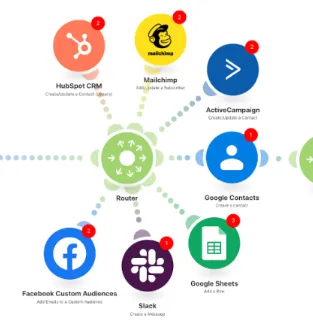
It is a system, not a single tool. When a job is marked complete in the field, an automated text and email go out to the customer with a direct link to leave a Google review, timed to land while the relief of cold air again is still fresh. Reviews under 4 stars route privately to the owner for a resolve-it-first response instead of posting publicly, which protects the storefront rating while still surfacing real complaints. New leads calling in get an instant automated text reply within the first couple of minutes, which matters enormously in Phoenix's 100-degree-plus months when the homeowner is calling three HVAC companies back to back and will book with whoever responds first. None of this requires new software for the technician to learn: the trigger is the job being marked done in whatever system you already dispatch from.
| Metric | Typical manual process | With automated review requests |
|---|---|---|
| Review ask method | Verbal ask or paper card, inconsistent | Automated text/email at job completion |
| Review conversion rate | Low single digits | 15-20% of completed jobs (industry-reported range for automated post-job requests) |
| Lead response time | Hours, often next business day | Minutes, automated first-touch text |
| Negative review handling | Posts publicly, owner finds out later | Routes privately below 4 stars before posting |
The review-conversion range above reflects commonly reported outcomes for automated post-job text requests in home services broadly; we were not able to verify a Phoenix-specific or HVAC-specific benchmark from a primary source, so treat it as directional rather than a guarantee.
What's included in the Essentials plan?
The Essentials plan is $297 a month plus a $1,000 one-time setup fee. It includes automated review requests sent after every completed job, instant text-back for new leads so a missed call doesn't become a missed customer, and a results guarantee: 10 new reviews within 90 days or your money back. This is the only tier currently live and sellable. Two higher tiers, Advantage and Ultimate, are planned for the future but not yet operational, so they are not described here as something you can buy today.
How does this compare to what competitors offer?
Housecall Pro and ServiceTitan both include review-request features as part of larger field-service management platforms, and if a Phoenix HVAC contractor already needs full dispatch, invoicing, and inventory management, those platforms do more in one place and are worth evaluating on that basis; their review automation is a feature bolted onto a bigger system, and the all-in-one pricing runs well above $297 a month once you add the modules most HVAC shops need. Podium focuses specifically on review generation and messaging the way this does, and is a fair alternative for a shop that wants a dedicated review tool without replacing its existing dispatch software. A contractor who needs full operations software should look at Housecall Pro or ServiceTitan first; one who just needs reviews and faster lead response without overhauling dispatch is the better fit here.
Frequently asked questions
Do I need a special ROC license classification to do both AC repair and furnace work in Phoenix?
The CR-39 dual classification covers both residential and commercial HVAC and refrigeration work under one license, which is why most full-service Phoenix HVAC contractors hold CR-39 rather than splitting into separate C-39 and R-39 licenses. Check current requirements directly with the Arizona ROC before applying, since classification details can change.
How fast does a review request need to go out after a job to actually get results?
Within the same day, ideally within an hour or two of the technician marking the job complete, while the relief of working AC is still the customer's main feeling about you. Waiting until end-of-week batch requests noticeably lowers response rates because the moment of gratitude has passed.
What happens if a customer leaves a 2-star review during a heat wave when tempers are short?
A properly configured system routes anything under 4 stars to the owner privately first, before it posts publicly, giving you a chance to make it right. This matters even more in Phoenix's peak season, when a frustrated customer waiting on an emergency repair is more likely to leave a harsh review they might not leave in cooler months.
Is the 10-reviews-in-90-days guarantee realistic for a smaller HVAC shop?
It depends on job volume. A shop completing roughly 3-4 residential jobs a week has enough completed-job volume to reach 10 reviews in 90 days at a 15-20% conversion rate; a shop doing far fewer jobs than that should discuss volume with us before signing up, since the guarantee assumes a baseline of completed jobs to request reviews from.
Can this work alongside my existing dispatch software like ServiceTitan or Housecall Pro?
Yes. The review-automation and lead-response system triggers off job completion and new-lead events, and it is built to sit alongside whatever field-service software a contractor already uses rather than replace it.