




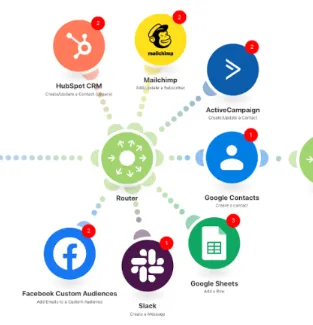





AI Lead Response and Review Automation for Austin Contractors
How Does Review Automation Help Austin Contractors Win More Jobs?
Review automation sends a text or email to a customer within minutes of a job closing, asks for a Google review in two taps, and screens the reply so a frustrated customer reaches the owner privately before reaching the public. In Austin, where a homeowner typically pulls up three or four contractors on a phone before calling one, a steady stream of recent reviews often decides which number gets dialed first.
That matters more in Austin in October 2026 than it did five years ago. The city has grown fast enough, and attracted enough new residents with no existing contractor relationships, that a first-time search carries more weight here than in a city where neighbors still trade referrals over a fence.
What Makes Austin's Contractor Market Different?
Austin's population reached 1,002,632 as of the Census Bureau's July 1, 2025 estimate, making it the 12th most populous city in the country and the fifth largest in Texas, behind Houston, San Antonio, Dallas and Fort Worth, according to the City of Austin Planning Department's own announcement of the milestone. Most of that growth has landed in the suburbs ringing the city rather than inside the core, which splits the contractor base into two different jobs: servicing an aging central housing stock and keeping up with a steady supply of brand-new construction on the edges.
That split shows up directly in trade demand. Roofing work in Austin is driven almost entirely by spring hail, not age. HVAC runs flat out for most of the year because Austin's summers push systems into near-continuous cooling, a very different load profile than a city with a real winter. Plumbing and electrical work splits between repipe and panel-upgrade jobs in older homes and new-install work behind the growth corridors. Garage door and pool service track new construction almost one to one, since both are standard add-ons in the master-planned communities going up north and southwest of downtown.
Why Does Spring Hail Season Matter Here?
Austin sits inside what local meteorologists and roofing companies sometimes call the edge of "hail alley," and the city's own storm history backs that up. A National Weather Service Austin/San Antonio newsletter ranking the region's costliest hailstorms lists Austin's top three as March 25, 2009 ($160 million in damage), March 25, 1993 ($125 million), and March 25, 2005 ($100 million), all three falling on the same calendar date in different years, a coincidence the NWS newsletter itself calls out. Those dollar figures were not adjusted for inflation at the time they were published.
| Date | Damage estimate | Rank |
|---|---|---|
| March 25, 2009 | $160 million | Austin's costliest hailstorm on record (as of the report) |
| March 25, 1993 | $125 million | Second costliest |
| March 25, 2005 | $100 million | Third costliest |
The practical effect for a contractor is simple. When one of these storms hits, roofing and exterior-trade demand spikes citywide within days, and homeowners end up comparing strangers under time pressure. A business with a visible, recent run of five-star reviews closes that comparison faster than one with none.
What Licensing Rules Should Austin Homeowners Know About?
Texas regulates its trades unevenly, and the gaps change how much weight a review carries. Electricians need a state license from the Texas Department of Licensing and Regulation, with a Master Electrician credential requiring two years as a journeyman plus roughly 12,000 hours of on-the-job training before the state exam. HVAC contractors need a TDLR Air Conditioning and Refrigeration Contractor license in Class A or Class B, scaled to the tonnage they install. Plumbing companies run through the Texas State Board of Plumbing Examiners, and operating one generally requires a Responsible Master Plumber designation backed by at least $300,000 in commercial liability insurance.
Roofing has no state license at all in Texas. On top of that state-level gap, Austin runs its own local layer: contractors register through the city's Austin Build + Connect platform to pull permits, a process that, per third-party contractor-registration guides, ends with a Contractor or Homeowner PIN number tied to proof of insurance. We could not confirm the current fee or processing time directly from the City of Austin's own site, so a contractor should check Austin's Development Services page before quoting a customer a specific timeline.
Which Austin Neighborhoods and Corridors Are Driving the Most Service Calls?
Mueller and East Austin mix recently redeveloped infill with decades-old housing stock nearby, which keeps electrical panel upgrades and plumbing repipe work steady even as new builds bring their own install jobs into the same zip codes. The Round Rock, Cedar Park, Pflugerville and Georgetown corridor north of the city is where most of the net-new rooftops are going up, and that pipeline is what drives garage door and pool service demand, since both are close to standard in new subdivisions there. South Congress and Hyde Park, both older central neighborhoods, lean harder on roofing and plumbing work tied to a housing stock that is simply older than what sits in the suburbs.
What Does the Essentials Plan Include for Austin Contractors?
Mouthpiece Interactive's Essentials plan is $297 a month plus a one-time $1,000 setup fee. It automates the review request after every closed job, flags negative feedback so it reaches the owner before it reaches the public, and is built to produce 10 new reviews in the first 90 days or the setup fee is refunded. It is the only tier currently live and sellable for Austin contractors. Two higher tiers are in planning but not yet operational, so they are not sold or described as available today.
How Fast Can an Austin Contractor Get Started?
Setup takes one call to connect whatever marks a job complete today, whether that is a CRM stage change, a dispatch app entry, or a simple text to the office, to the review request flow. Most contractors are live within a week. That speed matters most heading into spring storm season, when search interest in a given trade can spike within 48 hours of a hail event and stay elevated for weeks.
Frequently Asked Questions
Does review automation work for a small, one- or two-truck contractor in Austin?
Yes. The system runs off whatever you already use to mark a job finished, so crew size changes how many requests go out each week, not how the setup works.
What happens if a customer leaves a one-star review?
The flow routes a negative reply to the owner privately before it posts publicly, giving a chance to fix the problem or follow up directly rather than finding out about it in the Google listing.
Do all six trades (roofing, HVAC, plumbing, electrical, garage door, pool service) need a state license in Texas?
No. Electricians, HVAC contractors and plumbers carry state licenses through TDLR or the Texas State Board of Plumbing Examiners. Roofing, garage door and pool service have no equivalent state license, which puts more weight on review history for those trades specifically.
How does Austin's growth change review strategy compared to a slower-growing city?
A large share of Austin homeowners are new to the area and have no contractor relationships from neighbors or prior referrals, so a first Google search carries more weight here than in a city where word of mouth already does most of the work.
Is the Essentials plan the only option right now?
Yes. It is $297 a month plus a $1,000 setup fee with a 10-reviews-in-90-days guarantee. Other tiers are planned but not sold yet, so Essentials is what is actually available in October 2026.