







AI Lead Response and Review Automation for Tampa Roofing Companies
How fast do Tampa homeowners expect a callback after storm damage, and what happens if a roofer misses that window?
Most Tampa homeowners calling about roof damage expect a response within minutes, not hours, especially during active hurricane season. Roofing companies that answer or text back inside five minutes convert a far larger share of those calls into booked inspections than companies that return calls the next business day, when the homeowner has already called three other roofers.
That gap is the whole reason AI-driven lead response exists as a category, and it's worth walking through what it looks like for a roofing company working Tampa, Florida, in October 2026.
Why does lead response speed matter more for roofing than almost any other trade in Tampa?
Roofing leads in this market are weather-triggered and time-boxed. A homeowner in Seminole Heights who finds a stain on the ceiling after a squall doesn't wait around. They search, they call two or three numbers off Google, and they book with whoever answers first or texts back fastest. The National Oceanic and Atmospheric Administration's hurricane center sets the official Atlantic hurricane season at June 1 through November 30, which means Tampa roofers are still inside that window right now. Every missed call during active storm weeks is a lead that converts somewhere else.
The trade mix in Tampa makes this sharper. Bay News 9 reported after Hurricane Milton in 2024 that local roofing companies were flooded with calls in the days following the storm, with homeowners juggling different deductibles and needing help understanding what their policy actually covered. A roofer who can't staff the phones through that surge loses jobs to competitors who can, or to AI-assisted answering that never goes to voicemail.
What local conditions are shaping Tampa roofing demand in October 2026?
Three things matter here. First, the housing stock is mixed in a way that affects the sales conversation: older bungalow-style homes in Seminole Heights and the Hyde Park area often carry asphalt shingle or flat modified-bitumen roofs original to construction decades ago, while newer builds in Carrollwood and New Tampa lean toward dimensional shingle or tile. A roofing company's intake script and follow-up messaging needs to flex between "your 1950s shingle roof is past its service life" and "let's document storm damage on a five-year-old tile roof for your insurer," and generic review-request templates don't do that well.
Second, South Tampa's proximity to the bay means wind-driven rain and uplift risk show up differently than inland Carrollwood, so inspection photos and damage documentation carry more weight in insurance conversations near the water.
Third, the Westshore business corridor adds a steady stream of commercial flat-roof work alongside the residential volume, which is a different sales cycle and a different review audience than a homeowner job in New Tampa.
Do Tampa roofers need a state license, or is a local registration enough?
Florida splits roofing licensure into two tracks under Florida Statute 489 and the Construction Industry Licensing Board (CILB), part of the Department of Business and Professional Regulation (DBPR). A Certified Roofing Contractor license is issued at the state level and lets the holder work anywhere in Florida. A Registered Roofing Contractor credential is issued locally and generally limits the contractor to the county or municipality that issued it. Homeowners comparing quotes in Tampa sometimes don't know the difference, which is part of why "licensed and insured" language in review responses and website copy carries real weight here.
| License type | Issued by | Where it's valid | Typical use case |
|---|---|---|---|
| Certified Roofing Contractor (CCC) | State of Florida, CILB/DBPR | Statewide | Companies taking jobs across Hillsborough, Pinellas, and beyond |
| Registered Roofing Contractor | Local licensing board (e.g., Hillsborough County) | Issuing county/municipality only | Crews working exclusively inside one jurisdiction |
Homeowners and property managers can verify either license type through DBPR's public license search at myfloridalicense.com. We could not independently verify current exam and fee figures for either license type from DBPR's own site in this research pass, so a Tampa roofing company should confirm current requirements directly with CILB rather than relying on third-party contractor-education sites.
What does AI lead response and review automation actually do for a roofing crew?
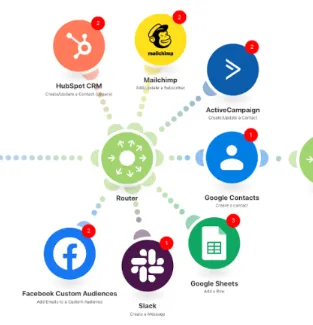
The mechanism is simple even though the phrase "AI" gets overused. When a lead comes in by phone, web form, or text, the system responds immediately, in most cases within a minute or two, confirms the basics (address, type of damage, whether it's an active leak), and gets the lead onto the calendar or into a live conversation with dispatch before the homeowner calls the next roofer on their list. After the job closes, the same system sends a review request at the right moment, by text and email, and follows up with homeowners who haven't responded yet.
Right now the only tier of this that's live and sellable is the Essentials plan: $297 a month plus a $1,000 setup fee, with a guarantee of 10 new reviews in 90 days or the money back. Two higher tiers, Advantage at $597 and Ultimate at $1,997, are planned for the roadmap but are not available to buy yet, so nobody should be quoted either of those as an active option today.
How does this compare to Podium or NiceJob for a smaller Tampa roofing outfit?
Podium is a broader communications platform built around two-way texting, webchat, and a shared inbox, with review automation as one feature inside a larger suite. That breadth helps a roofing company that also wants payments and VoIP in the same tool, but Capterra and Software Advice reviewers describe Podium's pricing as rising quickly once add-ons stack up, with starting prices quoted anywhere from roughly $49 to $63 per user per month depending on the listing and full pricing available only on request. A two- or three-truck crew that mainly wants reviews and fast lead response may find that more platform than it needs.
NiceJob is closer in scope: a flat-rate reviews-first plan, listed around $75 a month on Capterra and Software Advice, with automated review requests, follow-up reminders, and website trust widgets. It's a reasonable fit for a roofing company that mainly wants review volume and isn't trying to combine lead response and review follow-up into one automated sequence. One Capterra reviewer noted the automation can feel rigid if a business wants more control over the timing or wording of requests, which is the trade-off against a system built specifically to pair instant lead response with review follow-up for home-services trades.
The honest takeaway: a roofing company that already has strong front-desk coverage and just wants more reviews should look hard at NiceJob. A company juggling multiple communication channels across a bigger team should price out Podium. A smaller Tampa roofing operation trying to stop losing storm-season leads to slower competitors, while also building review volume, is the use case the Essentials plan was built for.
Frequently asked questions
Does a Tampa roofing company need a state-certified license to bid storm restoration jobs across Hillsborough and Pinellas counties?
Yes, in most cases. A Certified Roofing Contractor license from Florida's CILB is valid statewide, while a Registered Roofing Contractor credential is typically limited to the county or city that issued it. A roofer working jobs across multiple counties should hold the statewide certified license, not just a local registration.
Why do roofing leads in Tampa disappear so fast compared to other trades?
Storm damage leads are urgent and comparison-shopped in real time. Homeowners usually call two or three roofers within the same hour after finding damage, so the company that answers or texts back first, often within minutes, has a real structural advantage over one that returns calls later in the day.
Is the Essentials plan's 10-reviews-in-90-days guarantee realistic for a roofing company with seasonal volume?
It's designed for exactly that pattern. Because review requests go out automatically after each closed job, a roofing company that closes even a modest number of jobs across a 90-day window, which in Tampa often includes active storm season, has a workable path to that review count without manual follow-up.
What's the real difference between this and a tool like NiceJob for a roofing business?
NiceJob focuses on automated review requests and website trust widgets. This system pairs that review automation with immediate AI lead response on incoming calls and forms, so the same system that gets a storm-damage lead booked also follows up for the review once the job is done.